
Biocheck Diagnostics and Polyclinic Logo

Blogs

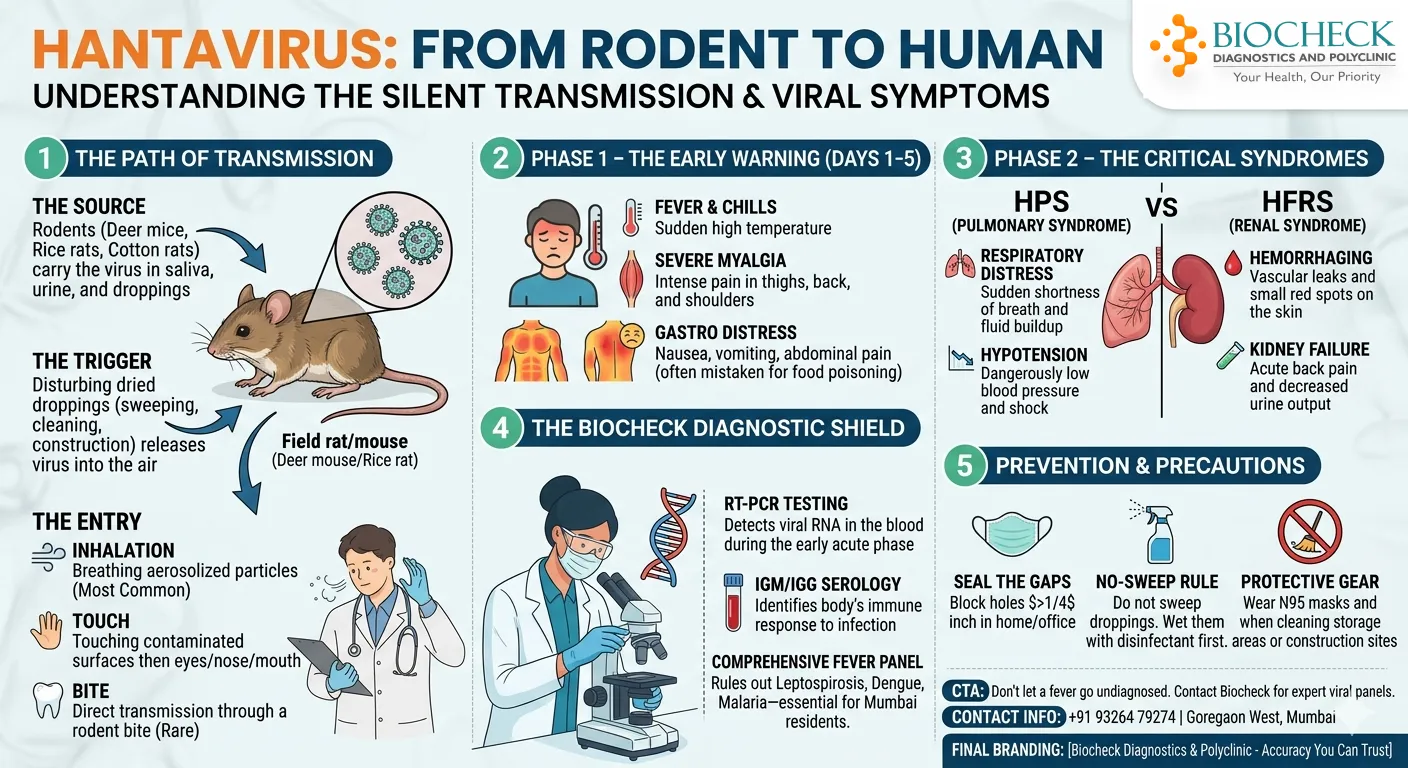
Biocheck Diagnostics And Polyclinic Blogs - An infographic showing the transmission of Hantavirus from rodents to humans through aerosolized particles and the resulting respiratory and renal symptoms.

Hantavirus Guide 2026: Understanding the Rodent-Borne Threat in Mumbai

Introduction: Why Hantavirus is in the News (May 2026)

In early May 2026, reports of a Hantavirus cluster aboard an international cruise ship sparked global health conversations. While the World Health Organization (WHO) has assessed the global risk as low, the news has resonated deeply in Mumbai, a city where the intersection of high-density living, ongoing construction, and a large rodent population makes "zoonotic" (animal-to-human) diseases a constant point of clinical interest.

At Biocheck Diagnostics & Polyclinic, we believe that informed patients are safer patients. While Hantavirus is currently rare in India compared to Leptospirosis or Dengue, its severe symptoms—which can mimic a common flu before rapidly progressing—make it a critical topic for residents of Goregaon, Malad, and the wider Mumbai suburbs. This guide breaks down the science, the symptoms, and the diagnostics you need to know.

1. What is Hantavirus? The Rodent Connection

Hantaviruses are a family of viruses spread mainly by rodents. Unlike many other viral illnesses, Hantavirus is not primarily spread from person to person (with the rare exception of the Andes strain found in South America). Instead, humans become "accidental hosts."

How Transmission Can Happen in Mumbai

In a bustling metropolis like Mumbai, rodents (rats and mice) are found in diverse environments—from high-rise construction sites in Goregaon, Andheri, Malad, Kandivali, Borivali, Jogeshwari and Suburbs Areas to the narrow lanes of older chawls and transit camps.

  • Aerosolization: This is the most common route. When rodent urine or droppings are disturbed (during cleaning or construction), the virus becomes airborne. Humans then breathe in these contaminated particles.
  • Direct Contact: Touching contaminated surfaces and then touching your nose, mouth, or eyes.
  • Bites: Though rare, a bite from an infected rodent can transmit the virus directly into the bloodstream.

2. One Virus, Two Syndromes: HPS vs. HFRS

Depending on the specific strain of the virus, Hantavirus generally manifests in two distinct clinical ways. Understanding these is vital for diagnostic accuracy.

A. Hantavirus Pulmonary Syndrome (HPS)

Commonly found in the Americas (and seen in the 2026 cruise ship cluster), HPS targets the lungs.

  • The Danger: It causes fluid to leak into the lungs, leading to severe respiratory distress.
  • Fatality Rate: Can be as high as 40–50% without intensive care.

B. Hemorrhagic Fever with Renal Syndrome (HFRS)

This is the variant more traditionally seen in Asia and Europe. It primarily targets the kidneys and blood vessels.

  • The Danger: It can lead to sudden kidney failure and internal bleeding (hemorrhaging).
  • Fatality Rate: Generally lower than HPS (1–15%), but still a significant medical emergency.

3. Identifying the Symptoms: The Two Phases

The challenge with Hantavirus is that its "Prodromal" (initial) phase looks exactly like a standard Mumbai viral fever.

Phase 1: The "Flu-Like" Start (Days 1–5)

  • Fever & Chills: Sudden onset of high temperature.
  • Severe Myalgia: Intense muscle aches, particularly in the large muscle groups like thighs, hips, and back.
  • Fatigue: A sense of total exhaustion.
  • Gastrointestinal Distress: Nausea, vomiting, and abdominal pain are common in about half of all cases.

Phase 2: The Critical Turn (Days 4–10)

As the "incubation period" ends, the disease takes a sharp turn based on the syndrome:

  • For HPS (Lungs): A persistent dry cough followed by rapid shortness of breath. Patients often feel like a "tight band is around their chest" or as if they are "drowning" as their lungs fill with fluid.
  • For HFRS (Kidneys): Sudden low blood pressure (shock), severe back/flank pain, and a significant decrease in urine output. You may also notice small red spots on the skin (petechiae) or bleeding in the eyes.

4. The Diagnostic Challenge: Why You Need Biocheck Diagnostics

Because the early symptoms of Hantavirus overlap with Leptospirosis, Scrub Typhus, and Dengue—all common in Mumbai—clinical diagnosis through physical exam alone is impossible.

At Biocheck Diagnostics & Polyclinic, we utilize advanced molecular and serological techniques to differentiate these threats.

Essential Tests for Hantavirus Detection

  • RT-PCR (RNA Detection): This is the gold standard for early detection. It looks for the actual genetic material of the virus in your blood. In India, a Qualitative Hantavirus PCR is highly specialized and is used during the acute phase of the illness.
  • IgM and IgG Antibody Testing (ELISA): This blood test detects the body's immune response to the virus. Presence of IgM antibodies indicates a current, active infection.
  • Comprehensive Fever Panel: Since Hantavirus is rare in Mumbai, we often recommend a panel that includes tests for Leptospirosis, Malaria, and Dengue to rule out the most likely culprits first.
  • Kidney (KFT) and Lung Monitoring: If HFRS is suspected, monitoring creatinine and urea levels via a Kidney Function Test is life-saving.

5. Remedies and Treatment: The Role of Supportive Care

Currently, there is no specific antiviral cure or vaccine for Hantavirus approved for general use. Treatment is entirely "supportive," meaning we help the body stay alive while it fights the virus.

  • Hospitalization: Suspected Hantavirus cases must be managed in an Intensive Care Unit (ICU).
  • Oxygen Therapy: Patients with HPS require supplemental oxygen or mechanical ventilation to keep blood oxygen levels stable.
  • Fluid Management: For HFRS, doctors must carefully balance fluids to support the kidneys without overloading the lungs.
  • Dialysis: In severe HFRS cases, temporary dialysis may be needed until kidney function recovers.

Crucial Note: If you have been exposed to rodents and develop a fever with shortness of breath, seek emergency care immediately. Early intervention is the single biggest factor in survival.

6. Precautions: Rodent-Proofing Your Mumbai Home

Prevention is the only "cure" for Hantavirus. Given Mumbai's environment, follow these steps:

A. Seal the Entry Points

Mice can squeeze through holes as small as a pencil. Use steel wool or cement to seal gaps around pipes, under sinks, and in baseboards—especially in older buildings in Goregaon.

B. Safe Cleaning (The "No-Sweep" Rule)

Never sweep or vacuum rodent droppings or nests. This kicks the virus into the air where you can breathe it.

  • The Procedure: Spray the area with a disinfectant (1 part bleach to 9 parts water). Let it soak for 5 minutes. Use a paper towel to pick up the waste, then mop the area. Wear a mask and gloves.

C. Garbage Management

In the heat of May, garbage decays quickly, attracting rodents. Use tight-fitting lids on all trash cans and avoid leaving pet food out overnight.

7. Hantavirus vs. Leptospirosis: A Mumbai Comparison

Mumbaikars often confuse these two because both are rodent-borne.

Feature Hantavirus Leptospirosis
Pathogen Virus Bacteria (Leptospira)
Transmission Inhaling dust/aerosols Contact with water/slush
Key Symptom Lung/Kidney failure Liver/Kidney/Muscle pain
Treatment Supportive (No antibiotics) Responds to Antibiotics
Diagnostic PCR / ELISA Leptospira IgM / PCR

8. Why Choose Biocheck Diagnostics for Specialized Testing?

Dealing with rare or complex viral infections requires a laboratory that prioritizes accuracy over volume.

  • Expert Verification: Every specialized viral report at Biocheck is verified by our MD Pathologist, ensuring clinical correlation.
  • Advanced PCR Facility: We leverage high-sensitivity molecular platforms to detect viral loads accurately.
  • Home Collection in Goregaon: If you are suffering from a high fever, don't risk a commute. Our phlebotomists follow strict biosafety protocols for home sample collection across Mumbai’s western suburbs.
  • Fast Turnaround: In cases of respiratory distress, every hour counts. We prioritize emergency panels to get results to your physician as quickly as possible.

Conclusion: Awareness is Protection

While the risk of a Hantavirus outbreak in Mumbai remains low in 2026, the city's environment demands that we stay vigilant about all rodent-borne threats. By practicing proper hygiene, rodent-proofing your home, and choosing expert diagnostic partners like Biocheck Diagnostics, you can navigate the "urban jungle" with confidence.

Concerned about a persistent fever or respiratory symptoms?

Trust the experts at Biocheck Diagnostics & Polyclinic for precise, rapid, and compassionate care.

📍 Visit us today: 2-minute walk from Ram Mandir Station (West), Goregaon, Mumbai.
📞 Book Your Test: +91 93264 79274
Book Online: Book Your Test Appointment

Medical Disclaimer: This blog is for informational purposes and should not replace professional medical advice. Always consult a doctor if you suspect a serious infection.

Available Near You

BIOCHECK Diagnostics & Polyclinic

Whether you’re in Malad, Goregaon, Jogeshwari, Andheri or any part of Mumbai, BIOCHECK Diagnostics & Polyclinic is your trusted local centre for Health Packages and comprehensive Health Packages services.


Shape