
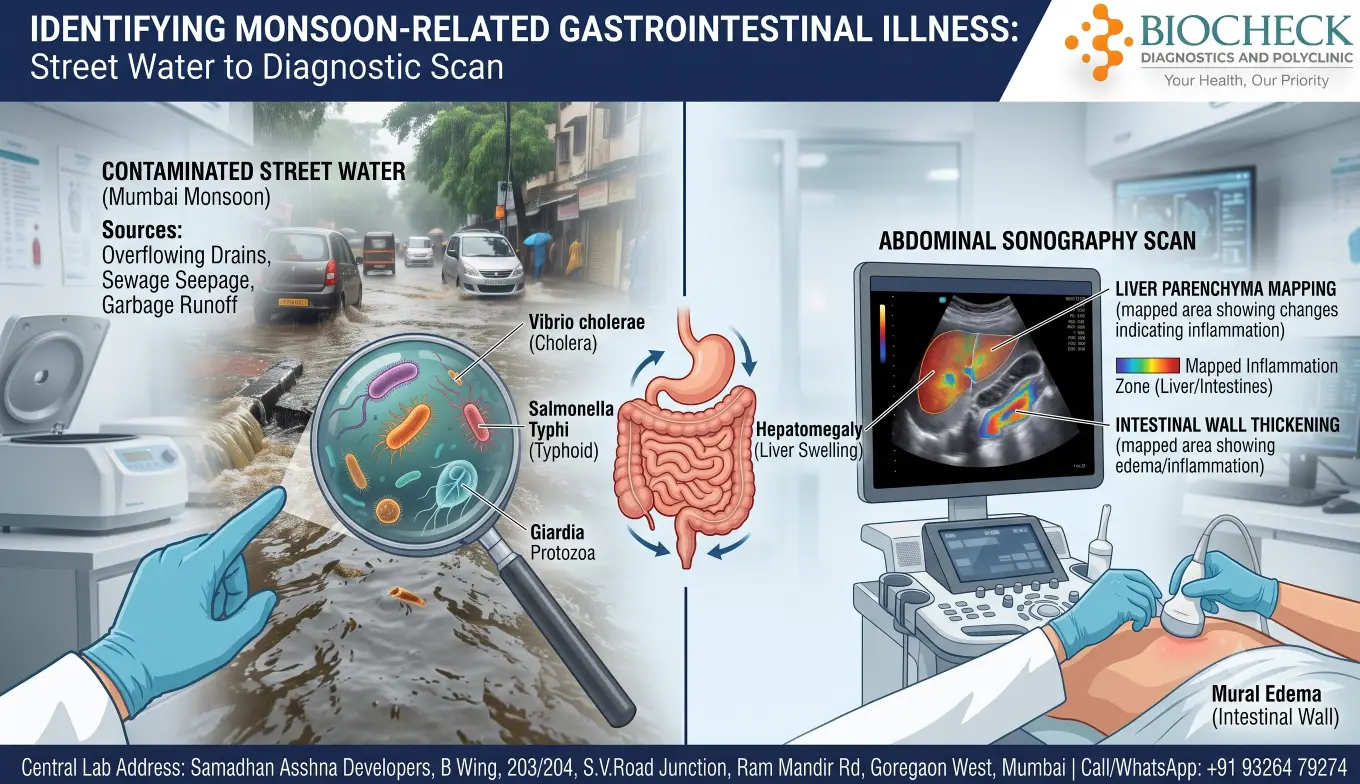
As we navigate the intense, late-July downpours in Mumbai, the city's infrastructure is pushed to its absolute limits. While the most visible signs of the monsoon are the waterlogged streets across Goregaon, Malad, and Andheri, the most dangerous threat is entirely invisible.
The heavy flooding causes suburban drainage systems and sewage lines to overflow, inevitably contaminating the municipal water supply and local food sources. This creates a massive, city-wide surge in acute digestive distress. Currently, clinics across the western suburbs are flooded with patients complaining of severe abdominal cramps, relentless nausea, and acute diarrhea.
Most Mumbaikars tend to brush these symptoms off as a standard "monsoon bug," simple food poisoning, or indigestion from eating roadside pani puri. They routinely reach for over-the-counter antacids, anti-diarrheal pills, or home remedies, expecting the pain to subside in a day or two.
However, when abdominal pain becomes sharp, localized, or persists for more than 48 hours, it is no longer just a mild stomach bug. You could be facing severe intestinal inflammation, an aggressive waterborne bacterial infection (like Typhoid or Cholera), or acute liver distress (Hepatitis). To treat it effectively, you have to look inside. This is exactly why an Abdominal Sonography (Ultrasound), combined with precise Clinical Pathology, serves as your ultimate first line of defense.
The human digestive tract is highly resilient, but the sheer volume of pathogens introduced during the Mumbai monsoon overwhelms its natural defenses.
When floodwaters mix with overflowing sewage, billions of microscopic pathogens (bacteria, viruses, and parasites) are released into the environment. These pathogens enter your system through the fecal-oral route. This doesn't just happen by directly drinking contaminated tap water.
During the July deluge, you can ingest these pathogens through:
Once ingested, these pathogens bypass the stomach acid and set up camp in your intestines, liver, or gallbladder. Common monsoon culprits include:
Differentiating between a 24-hour bout of mild indigestion and a severe, deep-tissue abdominal infection is critical. Relying on antacids when your liver is actively inflamed can delay life-saving medical intervention.
You must consult a physician and seek immediate diagnostic imaging if you experience any of the following "Red Flag" symptoms:
When you present with severe monsoon-induced abdominal pain, a physical examination (palpation) only gives a physician part of the story. To understand exactly which organ is under attack, doctors rely on the gold standard of non-invasive diagnostics: The Abdominal Sonography (Ultrasound).
Available within our comprehensive Radiology Directory at Biocheck Diagnostics, an abdominal sonography uses high-frequency sound waves to capture real-time images of the organs inside your belly. It is entirely painless, takes only 15 to 20 minutes, and involves absolutely zero radiation exposure.
Here is exactly what our specialized radiologists are looking for when scanning your abdomen during a monsoon infection:
Waterborne viruses like Hepatitis A and E aggressively attack hepatic cells. An ultrasound will instantly reveal if your liver is enlarged, inflamed, or texturally altered. Catching this early is vital before the infection progresses to severe clinical jaundice or liver failure.
The gallbladder stores bile, which aids in digestion. Severe gastrointestinal infections can cause the walls of the gallbladder to become highly inflamed (cholecystitis) or cause the bile to thicken into "sludge." An ultrasound accurately measures the thickness of the gallbladder wall, confirming if it is the source of your upper right abdominal pain.
When aggressive bacteria like Salmonella or E. coli attack the intestines, the intestinal walls become swollen and inflamed. High-resolution sonography can measure the thickness of the bowel loops and identify areas of localized inflammation (enteritis or colitis), helping your doctor understand the severity of the gastroenteritis.
In severe cases of abdominal infection or advanced liver distress, fluid can begin to leak and pool in the abdominal cavity. An ultrasound can detect even minuscule amounts of this "free fluid," triggering immediate advanced medical protocols.
While the sonography gives us the structural picture of your organs, Clinical Pathology identifies the exact microscopic culprit causing the structural damage. As part of our comprehensive diagnostic approach, a structural ultrasound should always be paired with routine waste analysis.
Because monsoon pathogens thrive in the digestive tract, analyzing a stool sample provides a direct window into the infection. At Biocheck Diagnostics, our MD Pathologists examine stool samples under high-powered microscopes to identify:
A simple urine test provides massive amounts of data regarding your systemic response to the abdominal infection.
Guessing the cause of severe stomach cramps during the Mumbai monsoon is a dangerous game. Treating a Hepatitis infection with over-the-counter anti-diarrhea pills will not work and can cause severe complications. You need to see the structural damage and identify the microscopic pathogen simultaneously.
At Biocheck Diagnostics & Polyclinic, we provide a seamless, integrated diagnostic experience. You do not need to visit a hospital to get a high-quality scan. Our facility in Goregaon West is equipped with state-of-the-art sonography machines operated by expert radiologists, alongside a fully automated clinical pathology lab overseen by MD Pathologists.
If you are suffering from unexplained, persistent abdominal pain this July, do not wait for the symptoms to worsen. Secure an immediate Abdominal Sonography and comprehensive Stool/Urine routine at our clinic to get your digestive health back on track safely and accurately.
📍 Radiology & Pathology Center: Samadhan Asshna Developers, B Wing, 203/204 S.V.Road, Junction, Ram Mandir Rd, Goregaon West, Mumbai, Maharashtra 400104
📞 Direct Booking (Scan Appointments & Pathology):
+91 93264 79274
🌐 View Our Radiology & Pathology Directory:
https://biocheckdiagnostics.com/directory-of-services-pathology-laboratory
Available Near You
Whether you’re in Malad, Goregaon, Jogeshwari, Andheri or any part of Mumbai, BIOCHECK Diagnostics & Polyclinic is your trusted local centre for Sonography and comprehensive Sonography services.