
Just as residents of Mumbai breathe a collective sigh of relief as the heavy monsoon rains withdraw, the city is hit by a brutal "second summer." The notorious October Heat is characterized by a punishing combination of residual monsoon humidity and intense, direct sunlight caused by decreased rainfall. With temperatures routinely exceeding 35°C and humidity levels trapping the heat close to the ground, the atmosphere becomes heavily oppressive.
For the average urban professional commuting daily from Kandivali or Borivali to commercial hubs in Malad, Goregaon, and Andheri, this weather transition is physically exhausting. Navigating crowded local train platforms, sitting in stagnant traffic on the Western Express Highway, and walking under the direct afternoon sun places a massive thermal load on the human body. As the body desperately tries to cool itself, clinics across the western suburbs see a dramatic spike in patients suffering from sudden dizziness, severe muscle cramps, and profound fatigue.
Many people dismiss these symptoms as simply "being tired" from a long workday. However, clinical pathology reveals a far more dangerous underlying issue: severe heat exhaustion driven by an acute electrolyte imbalance. Understanding the physiological impact of the October Heat, recognizing the warning signs of mineral depletion, and knowing when to seek diagnostic testing is critical for maintaining your health during this punishing seasonal shift.
To understand why the October Heat is so draining, you must understand how your body regulates its core temperature. When your internal temperature rises, your body activates its primary cooling mechanism: sweating. As sweat evaporates from your skin, it pulls heat away from your body. However, in Mumbai's highly humid October environment, sweat does not evaporate efficiently. Instead, it clings to your skin and soaks your clothes, prompting your body to sweat even more in a desperate attempt to achieve that cooling effect.
This continuous, heavy sweating comes at a steep physiological cost. Every single drop of sweat carries away not just water, but significant quantities of essential minerals, including sodium, potassium, chloride, and magnesium. These minerals, collectively known as electrolytes, carry an electrical charge that is absolutely vital for conducting nervous system signals, contracting muscles, and regulating the hydration levels inside your cells.
When you spend an hour commuting in the intense heat, you can lose upwards of a liter of sweat, taking a massive payload of electrolytes with it. Once these mineral levels drop below their optimal reference ranges, your body's electrical and muscular systems begin to misfire.
Heat-related illnesses exist on a spectrum, escalating quickly from mild discomfort to severe medical emergencies. Recognizing the early warning signs can prevent a simple daily commute from turning into a hospital visit.
When you lose just 2% of your body weight in water, your physical and cognitive performance drops noticeably. You may experience persistent fatigue that does not improve after sitting in an air-conditioned room, mild headaches, and increased thirst.
If fluid and mineral loss continues unchecked, the situation becomes medically serious. At a 5% loss of body water, severe electrolyte imbalances occur. Look out for these critical red flags:
Severe Muscle Cramps: Often occurring in the calves, feet, and abdomen. This happens because potassium and magnesium levels are too low to help muscles relax after contracting.
Dizziness and Postural Hypotension: Feeling lightheaded or dizzy immediately upon standing up from a seated position. This is caused by a drop in blood volume.
Heart Palpitations: Feeling your heart racing, pounding, or skipping beats even while resting. Potassium regulates the electrical impulses of your heart; when it drops too low (hypokalemia), it can trigger dangerous arrhythmias.
Brain Fog and Confusion: Sodium regulates the fluid balance in your brain cells. Rapid drops in sodium (hyponatremia) can cause persistent mental fog, irritability, and in severe cases, seizures.
Nausea: Unexplained nausea and loss of appetite, which further prevents you from consuming the minerals your body desperately needs.
The most common mistake Mumbai residents make when suffering from heat exhaustion is attempting to fix it by rapidly chugging liters of plain, filtered water. While hydration is crucial, drinking massive amounts of plain water after significant sweat loss can actually be highly dangerous.
When you sweat heavily, you lose both water and sodium. If you replace that lost volume exclusively with plain water, you dilute the remaining sodium in your bloodstream even further. This condition is known clinically as dilutional hyponatremia. It causes water to rush into your cells to balance the sodium concentration, leading to cellular swelling. When brain cells swell, it triggers severe confusion, headaches, and can escalate into a life-threatening neurological emergency.
Proactive hydration means replacing exactly what you lost. If you are sweating through your clothes on the local train, you must incorporate electrolyte-rich fluids into your routine. Oral Rehydration Solutions (ORS), fresh coconut water, or traditional nimbu pani (lemon water) with a pinch of rock salt are infinitely superior to plain water for reversing heat stress.
When symptoms of fatigue, dizziness, and muscle cramping persist despite resting and hydrating, guessing is no longer a safe strategy. You need objective clinical pathology to determine exactly which systems are strained and which minerals are depleted. At Biocheck Diagnostics, our medical teams utilize a specific diagnostic triad to assess heat-induced physiological stress.
This is the frontline diagnostic test for heat exhaustion. A blood draw provides an exact measurement of your vital minerals.
Sodium: A low sodium reading confirms hyponatremia, explaining symptoms of confusion, lethargy, and persistent nausea.
Potassium: A low potassium reading confirms hypokalemia, directly explaining severe muscle cramps and dangerous cardiac palpitations.
Chloride: Works alongside sodium to maintain fluid balance and acid-base equilibrium in the blood.
When you are severely dehydrated, the liquid portion of your blood (plasma) decreases. This causes your blood to become highly concentrated and sludge-like. A routine CBC measures your Hematocrit (PCV), which is the volume percentage of red blood cells in your blood. An abnormally high hematocrit is a definitive clinical marker of severe dehydration, warning your physician that your blood is too thick, forcing your heart to work overtime to pump it through your arteries.
Your kidneys require adequate blood flow and hydration to filter waste from your body. Severe dehydration forces the kidneys to conserve water, drastically reducing urine output. This acute stress can cause levels of Serum Creatinine and Blood Urea Nitrogen (BUN) to spike. Tracking these markers ensures that your heat exhaustion hasn't triggered an episode of pre-renal acute kidney injury.
For individuals over 40, or those with existing hypertension or heart disease, the October Heat is a massive cardiac stressor. Thickened blood and low potassium levels combine to create a highly volatile environment for the heart. If you experience unusual breathlessness or a racing heartbeat after mild outdoor exposure, a Resting ECG is absolutely vital. This fast, non-invasive test maps the electrical activity of your heart, immediately detecting heat-induced arrhythmias or silent ischemic stress.
Protecting yourself from the October Heat requires strategic daily planning. Do not wait for symptoms to appear before taking action.
Hydrate Proactively: Do not wait to feel thirsty. The sensation of thirst is a delayed biological alarm indicating that you are already clinically dehydrated. Drink fluids consistently throughout the day, aiming for at least 3 liters if you work indoors, and up to 4 liters if you spend time outside.
Monitor Your Urine: Your urine color is the most accurate daily indicator of your hydration status. Your goal should be a pale, almost clear yellow. Dark yellow or amber urine is a stark warning that your kidneys are desperately conserving water.
Avoid Peak Heat Hours: The sun's thermal load is most aggressive between 10:00 AM and 4:00 PM. Whenever possible, schedule outdoor errands or site visits for the early morning or late evening.
Dress Strategically: Ditch synthetic fabrics that trap heat and moisture. Wear lightweight, loose-fitting cotton clothing that allows for maximum air circulation and sweat evaporation.
Eat Your Hydration: Incorporate water-rich, cooling foods into your diet, such as watermelon, cucumbers, oranges, and yogurt. Avoid excessive caffeine and alcohol, as both act as diuretics that actively flush water and minerals out of your body.
Do not let the October Heat completely drain your vitality. If you are experiencing persistent fatigue, brain fog, or muscle cramps, taking an over-the-counter painkiller is not the solution. You need to map your mineral balance.
Biocheck Diagnostics makes proactive health tracking effortless for residents across the western suburbs. You can walk right into our newly opened Pathology Collection Center at Shop No. 3, Mahavir Majesty (opposite Turakhia Park in Dahanukar Wadi, Kandivali West) for a fast, hygienic morning blood draw.
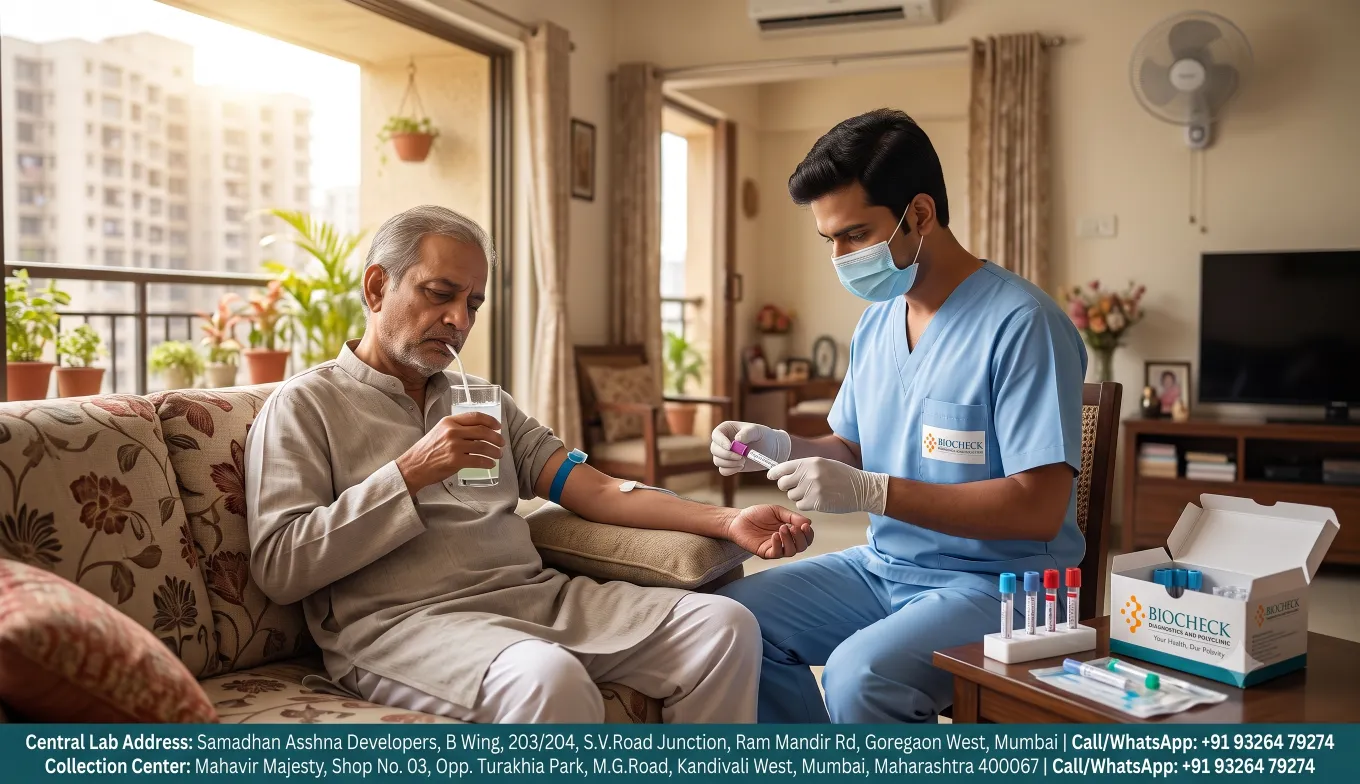
If you are too drained to travel, leverage our Home Sample Collection service. Our expert phlebotomists will arrive at your doorstep anywhere across Kandivali, Borivali, or Malad, ensuring your Electrolyte Panel, CBC, and Kidney Function samples are collected safely from your living room.
For patients requiring comprehensive cardiac evaluations, including Resting ECGs and high-resolution imaging, our Central Laboratory and Polyclinic in Goregaon West (at the S.V. Road Junction near Ram Mandir Rd) is fully equipped to provide immediate, M.D. Pathologist-verified insights.
Book your Biocheck Basic Health Package (₹1,800) today , which comprehensively covers your Electrolytes, Kidney Function, CBC, and more. Replenish your minerals, track your metrics, and reclaim your energy this October.
Available Near You
Whether you’re in Malad, Goregaon, Jogeshwari, Andheri or any part of Mumbai, BIOCHECK Diagnostics & Polyclinic is your trusted local centre for Health Packages and comprehensive Health Packages services.