
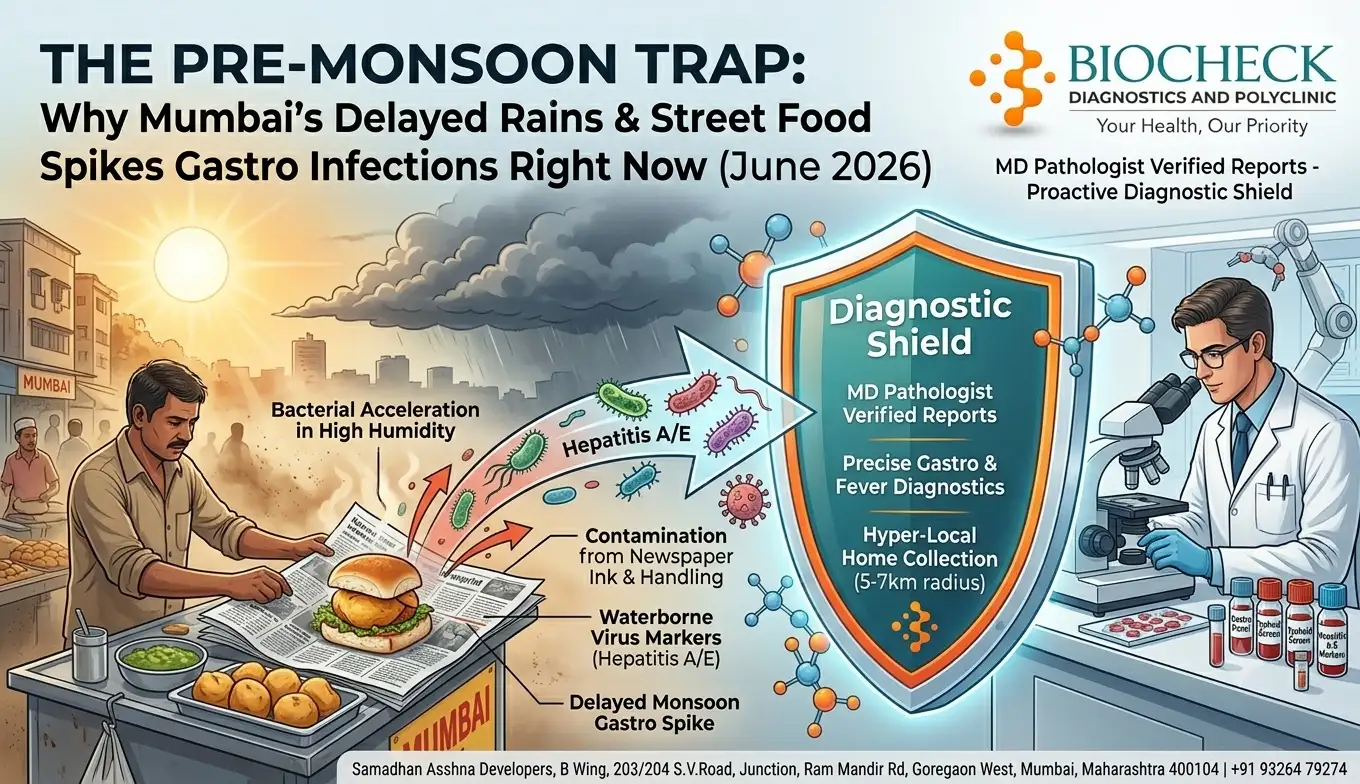
As of mid-June 2026, Mumbaikars find themselves trapped in a punishing meteorological holding pattern. While the India Meteorological Department (IMD) has noted the formal advance of the monsoon into the southern Konkan region, its northward movement has slowed. Instead of continuous rainfall and cooling relief, Mumbai is experiencing intense pre-monsoon heat ranging between 33°C and 35°C combined with oppressive humidity levels of 74% to 77%.
This unique climate combination creates an ideal environment for rapid microbial growth. Food deteriorates significantly faster than normal, while aging municipal water infrastructure faces increased risks of contamination through micro-leakages and environmental stress.
At the same time, the Food Safety and Standards Authority of India (FSSAI) Western Region and the Brihanmumbai Municipal Corporation (BMC) have recently intensified enforcement actions against street food vendors across Mumbai. A major concern is the continued use of newspapers for serving and wrapping hot snacks such as vada pav, samosas, and pakoras—a practice that poses serious chemical and microbiological health risks.
The combination of extreme humidity and poor food handling practices creates a layered public health concern that extends well beyond temporary digestive discomfort.
When hot and oily foods come into direct contact with printed newspapers, heat and fats act as solvents that accelerate the transfer of printing chemicals into the food. Toxic pigments, binding agents, and heavy metals such as lead, chromium, and cadmium can migrate into meals and enter the body through consumption.
Repeated exposure to these contaminants over time may contribute to systemic toxicity affecting neurological health, kidney function, and other vital organs.
Newspapers pass through multiple stages of handling, transportation, and storage before reaching vendors. Throughout this process, they may accumulate dust, dirt, environmental pollutants, and microbial contaminants.
In humid weather conditions, paper fibers can act as carriers for harmful microorganisms. Food served in newsprint can become contaminated with bacteria and viruses including Escherichia coli (E. coli), Salmonella, Staphylococcus aureus, Hepatitis A, and Norovirus.
Clinical Warning: The use of newspaper packaging combines both toxic chemical exposure and elevated microbiological risk, significantly increasing the likelihood of gastrointestinal illness.
With gastrointestinal complaints increasing across Mumbai suburbs including Goregaon, Malad, Andheri, and Jogeshwari, it is important to recognize that not every stomach infection is simple food poisoning. Conditions such as Typhoid Fever require targeted diagnosis and medical management.
| Clinical Parameter | Acute Gastroenteritis (Food Poisoning) | Typhoid Fever (Salmonella Typhi) |
|---|---|---|
| Onset Timeline | Rapid (2 to 12 hours after consuming contaminated food) | Gradual (Typically 5 to 14 days after exposure) |
| Fever Pattern | Low-grade or absent; brief spikes during active symptoms | Progressive step-ladder fever that increases daily |
| Abdominal Symptoms | Sharp cramping followed by watery diarrhea | Diffuse abdominal pain, constipation, or pea-soup stools |
| Systemic Signs | Dehydration, fatigue, weakness | Enlarged liver/spleen, coated tongue, lethargy, bradycardia |
| Diagnostic Urgency | Often improves within 24–72 hours with hydration | Requires targeted laboratory evaluation to avoid complications |
If you develop persistent fever, severe digestive symptoms, or prolonged weakness during this high-risk seasonal period, laboratory testing can help identify the underlying cause and guide appropriate treatment.
A CBC combined with CRP testing serves as an important first-line screening tool. Elevated white blood cell counts and increased CRP levels may indicate active bacterial infection and help distinguish it from routine viral illnesses.
For a deeper understanding of routine blood markers, explore our guide on decoding blood work parameters and level guides.
Waterborne viral infections such as Hepatitis A and Hepatitis E often increase during pre-monsoon transitions. Elevated bilirubin levels and abnormal liver enzyme values (SGPT/SGOT) may indicate early hepatic inflammation before visible jaundice develops.
Although modern laboratory systems rely heavily on advanced automation, expert human review remains essential for ensuring diagnostic accuracy.
Rapid pathogen assays and automated analyzers can occasionally generate borderline or cross-reactive results, especially when multiple bacterial and viral infections circulate simultaneously during seasonal transitions.
While automated systems can identify abnormal values, they cannot fully interpret subtle cellular changes or correlate findings with broader clinical patterns. Blood smear morphology, toxic granulations, and complex antibody responses often require specialized pathological assessment.
At Biocheck Diagnostics & Polyclinic, every specialized gastro panel, blood marker evaluation, and stool culture undergoes review by qualified MD Pathologists. This additional layer of validation helps ensure that physicians receive dependable and clinically meaningful reports.
To learn more about our laboratory quality standards, explore our article on why MD Pathologist-led laboratory reports are vital in Mumbai.
When gastrointestinal symptoms, dehydration, or persistent fever make travel difficult, accessing reliable diagnostic services should not add further stress.
Biocheck Diagnostics & Polyclinic provides professional home sample collection services directly from our central laboratory located at the S.V. Road Junction (Ram Mandir Road, Goregaon West).
Our certified phlebotomists follow strict sanitization protocols and use temperature-controlled transport systems to preserve the integrity of blood cultures, enzyme assays, and sensitive laboratory samples during transit.
This ensures sample stability even during intense pre-monsoon temperatures and helps maintain diagnostic accuracy from collection to analysis.
To explore our complete diagnostic portfolio, visit our page on affordable pathology health packages in Mumbai and Goregaon, or browse our comprehensive pathology laboratory services directory.
Seasonal infections can escalate quickly when high temperatures, humidity, unsafe food handling, and contaminated water sources converge. Early awareness and timely diagnostic testing remain the most effective tools for preventing complications.
If you or a family member experiences persistent fever, gastrointestinal symptoms, or signs of dehydration, consider obtaining appropriate laboratory testing and medical guidance without delay.
Stay informed, stay hydrated, and prioritize preventive health measures throughout this challenging pre-monsoon period.
📍 Address: Samadhan Asshna Developers, B Wing, 203/204 S.V.Road, Junction, Ram Mandir Rd, Goregaon West, Mumbai, Maharashtra 400104, India
📞 Call / WhatsApp: +91 93264 79274
🌐 Official Portal: https://biocheckdiagnostics.com
Available Near You
Whether you’re in Malad, Goregaon, Jogeshwari, Andheri or any part of Mumbai, BIOCHECK Diagnostics & Polyclinic is your trusted local centre for Health Packages and comprehensive Health Packages services.